
Around the world, student loans are now a significant source of funding for students pursuing higher education. Governments and financial institutions have implemented loan programs in numerous African nations to assist students in covering their tuition, housing, books, and other educational costs. These initiatives aim to improve educational opportunities, particularly for pupils from low-income households. Enhancing transparency, digital application procedures, and equitable fund distribution have been the main goals of recent modifications to student loan systems. Reforms have been implemented in nations including Tanzania, Kenya, South Africa, and Nigeria to improve the efficiency and accessibility of student loans.
Thousands of university students in Tanzania continue to receive loans from the Higher Education Students’ Loans Board (HESLB) each year. To cut down on paperwork and expedite processing, the Higher Education Students’ Loans Board implemented online application methods. According to government records, over 230,000 students requested for loans for the 2025–2026 school year, and over 170,000 of those applications were approved. Students doing courses in science, education, health, and engineering were given preference because these subjects are thought to be crucial for the advancement of the country.
The adoption of digital verification is a significant improvement in many student loan programs. Birth certificates, academic transcripts, national identity numbers, and admission letters must now be submitted online by applicants. This has improved accuracy and decreased fraud. For instance, applicants in Tanzania upload papers and monitor the status of their applications using the Online Loan Application and Management System (OLAMS). The procedure is now quicker and more transparent than it was in prior years because students can receive updates via email and SMS notifications.
When deciding who gets a loan, eligibility requirements are crucial. The majority of loan boards demand that applicants be citizens, accepted into a recognized university, and in need of financial assistance. When distributing loans in Kenya, the Higher Education Loans Board takes into account variables such family income, orphan status, handicap, and place of origin. In order to provide equal educational opportunities, students from underrepresented areas are frequently given extra consideration. Rwanda and Uganda both have similar systems.
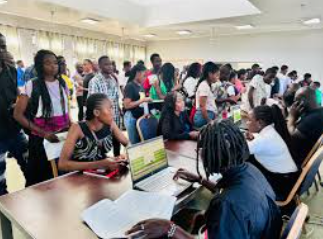
Another important consideration when applying for student loans is academic achievement. In order to continue receiving financial aid, students are typically expected to maintain high grades. Students must pass a specific percentage of their modules each year in order to be eligible for the National Student Financial Aid Scheme in South Africa. For instance, if academic performance is below the necessary level, a University of Cape Town engineering student may lose funding. Students are encouraged by this policy to put in a lot of effort and finish their coursework on time.
The addition of mobile payment and repayment mechanisms is another significant development. Nowadays, a lot of lenders let graduates and students use internet banking and mobile money services to pay back debts. Graduates in Tanzania have three options for repayment: workplace deductions, cell networks, and banks. As a result, loan recovery rates have increased and governments are now able to support more students. Following the introduction of digital payment options, loan repayment collections dramatically rose, according to recent HESLB data.
Examples from real life demonstrate how student loans can change people’s lives. A Tanzanian medical student from Mwanza who was unable to pay for his education was fully supported by HESLB and went on to become a doctor. Similar to this, HELB financing has allowed numerous students from remote Kenyan areas to attend universities. These success stories show how educational loans assist young people in Africa find work and lessen poverty.
Even with these successes, there are still issues with student loan programs. Inadequate funding in comparison to the large number of applications is one of the main issues. Due to government budget constraints, many of qualified students in Nigeria do not receive full financial assistance. Loan repayment default, which occurs when graduates don’t pay back debts after finishing their education, is another problem. This restricts assistance for upcoming students and has an impact on the long-term viability of loan programs.
Additionally, organizations and governments are enhancing awareness campaigns to inform students about loan application processes. To teach first-year students how to properly apply for loans, universities host orientation events. These days, deadlines, prerequisites, and application instructions are frequently disseminated via government websites, radio shows, and social media channels. Errors like missing crucial dates or providing incomplete paperwork have decreased as a result.
Students are recommended to get the necessary paperwork ready in advance in order to submit a successful student loan application. National identification cards, academic credentials, passport-sized photos, admission letters, and evidence of parents’ income are typical prerequisites. Before submitting applications online, applicants should carefully read all guidelines. For instance, uploading ambiguous papers or entering inaccurate bank information can cause approval to be delayed. For future reference, students should retain copies of every document they submit.
The significance of repayment obligations following graduation should also be understood by students. Student loans must be repaid in accordance with predetermined terms; they are not free donations. Governments are able to fund new students each year thanks to repayments. After landing a job and making a minimal wage, graduates in many nations start repaying their loans. In order to give graduates time to find employment before deductions start, some nations also offer repayment grace periods.
To sum up, student loan schemes are still essential for increasing access to higher education in Africa and other regions of the world. Loan procedures are now more efficient and transparent thanks to recent changes like digital applications, mobile repayments, and enhanced verification methods. Student loans continue to be an effective instrument for assisting young people in achieving academic and professional success, despite persistent issues including insufficient funding and repayment defaults. Students can gain a lot from these financial assistance programs by carefully adhering to the application requirements and continuing to perform well academically.